Charles Lindbergh, who became world-famous for making the first solo, non-stop transatlantic flight from New York to Paris in 1927, was a cat lover. “Patsy” the cat often accompanied Mr. Lindbergh on his flights but was not on the transatlantic flight. When asked why Patsy didn’t join him, Mr. Lindbergh said, “It’s too dangerous a journey to risk the cat’s life.”
In Old San Juan, Puerto Rico, there are many stray cats roaming the streets. These cats are taken care of by Save the Gato, a non-profit organization. Because most of the cats are feral, they are trapped, neutered/spayed, vaccinated, and released. The organization also supplies food and water for them.
A cat needs to drink about 4 ounces of water per 5 pounds of lean body weight every day. To help them achieve this health goal, leave clean fresh water in an available bowls around the house. You can also add some fresh water to their wet food.
Wildcats instinctively hide their excrement to avoid unwanted attention from predators and more dominant wildcats. Although domestic felines don’t have predators to worry about at home, their survival instincts still tell them to bury their poop, just in case.
The term allogrooming refers to grooming between members of the same species. In cats, allogrooming appears to be a way to show social acceptance, get help reaching parts of the cats can’t reach on their own, and demonstrate social heirarchy. It may also be a behavior picked up from their mothers.


The Tonkinese (above) was developed from a mixture of Siamese and Burmese breeds.
photo from Cat Fancier’s Association
Black Cats


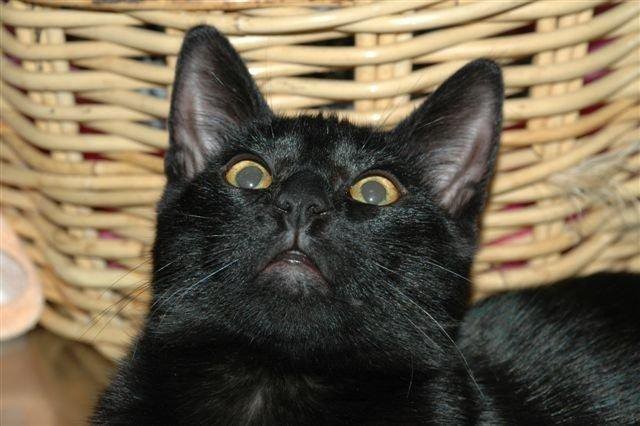


The same genetic mutation that causes black cats to produce excess melanin may also make them more resistant to disease, especially feline immunodeficiency virus (FIV).
The genes that produce black fur are similar to the genes that help the human body resist HIV.
Black cats may have certain genetic mutations that make them less susceptible to some diseases.
Researchers have mapped, cloned, and sequenced genes associated with melanism, or having a black coat. They identified changes in a gene called agouti that controls blackness in the hair of domestic cats.
The word for coward, Scaredy-Cat was coined by Dorothy Parker in the 1933 short story, “The Waltz.” She may have taken inspiration from “fraidy cat” which according to the Oxford English Dictionary, began showing up in slang dictionaries arount 1910.
A nursing female cat—or any mature, unspayed female cat of breeding age—is called a queen. The process of giving birth is referred to as “queening”. In addition to being called a queen, female cats have a few other specific terms depending on their status. Dam: The official breeding term for a mother cat (analogous to “sire” for the male). Molly: A colloquial term for a female cat, often specifically used to denote a spayed (fixed) female or a young female too small to reproduce.
CATS POSSESS HIGHLY SPECIALIZED, EFFICIENT KIDNEYS THAT CAN FILTER OUT EXCESS SALT, ALLOWING THEM TO HYDRATE BY DRINKING SEAWATER IN EMERGENCY SURVIVAL SITUATIONS.
This ability traces back to their evolutionary history. Modern domestic cats descended from desert-dwelling African wildcats. Because water sources were incredibly scarce in arid environments, cats evolved to conserve water exceptionally well. Their kidneys have an incredible renal capacity to highly concentrate urine, excreting excess sodium while absorbing the water content to stay hydrated. While they can technically survive on seawater for short periods, it is not safe or healthy for them to do so regularly.
There are limits to tolerance. If a cat ingests too much seawater without any access to fresh water or moisture-rich food, the sheer volume of salt will eventually overwhelm their system, causing severe dehydration and kidney damage. Risk of salt poisoning.
Drinking too much saltwater can lead to hypernatremia (dangerously high blood sodium levels). This can trigger vomiting, diarrhea, tremors, seizures, or even death. If you notice a pet cat sneaking a few licks out of a saltwater aquarium or a saltwater pool, there is no need to panic—their bodies can easily handle small, accidental amounts. However, they should always be provided with plenty of clean, fresh water as their primary choice.



As of 2024, the loudest cat purr was 67.8 decibels and was produced by a cat named Smokey in 2011 and a cat named Merlin in 2015, both of the United Kjngdom. That’s about as loud as a vacuum cleaner!

Cat allergens have been found in spaceships. Fel d 1, the primary cat allergen is so tiny and sticky that it’s been able to hitchhike onto astronauts and spacecraft workers, and hence into spacecraft and the International Space Station.
Domestic cats can run downhill faster than uphill…but it’s not just gravity driving this. A cat’s scapular mobility changes their stride length and weight distribution on declines.
One hypothesis about how cats were spread worldwide comes down to their popularity on sailing ships. Sailors liked having them as rodent control, and wherever they landed, some cats probably disembarked and were left behind.
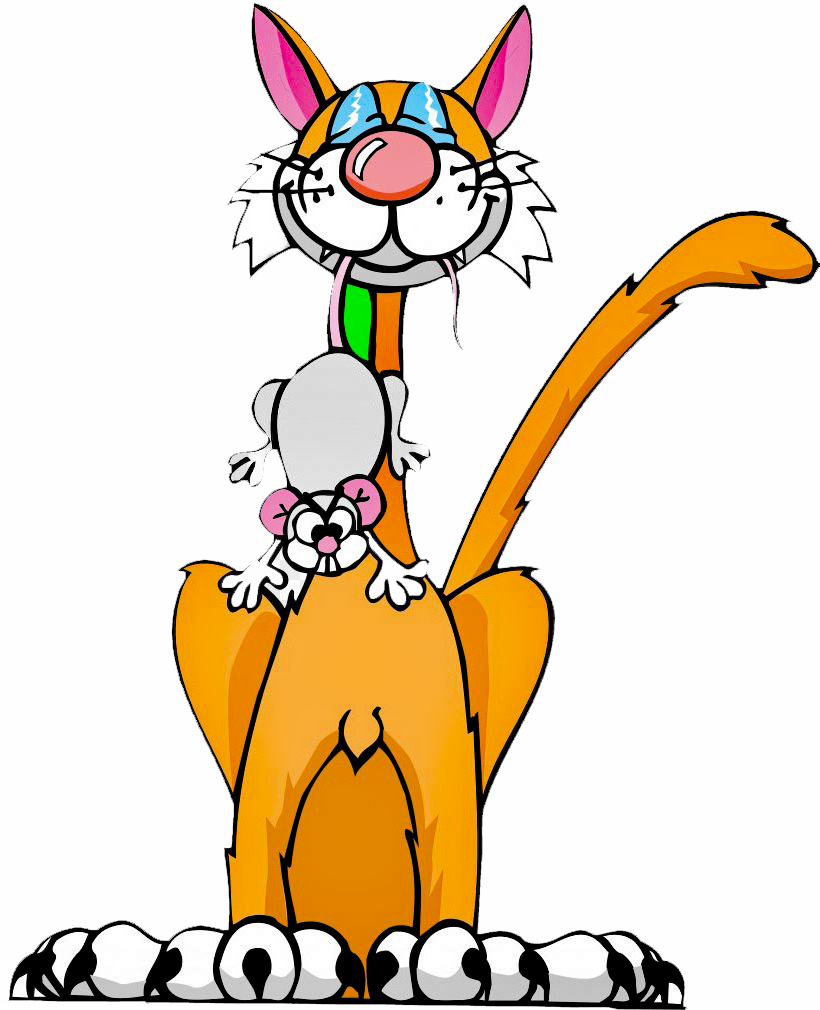
WHEN A CAT SPOTS PREY, her excitement is told in a swishing tail and chattering teeth! The manner in which she is chomping is the same killing bite she would use on prey. In effect, she is carrying out the attack despite her inability to reach her target. Cats make 3 general types of sounds: murmurs, vowels and strained high-intensity sounds…and at least 16 distinct vocalizations and maybe more! The chatter, which falls into the category of strained high-intensity sounds, may come from the mother cat’s training. She uses much the same sound to alert her kittens to potential prey.